
Last updated November 25, 2026
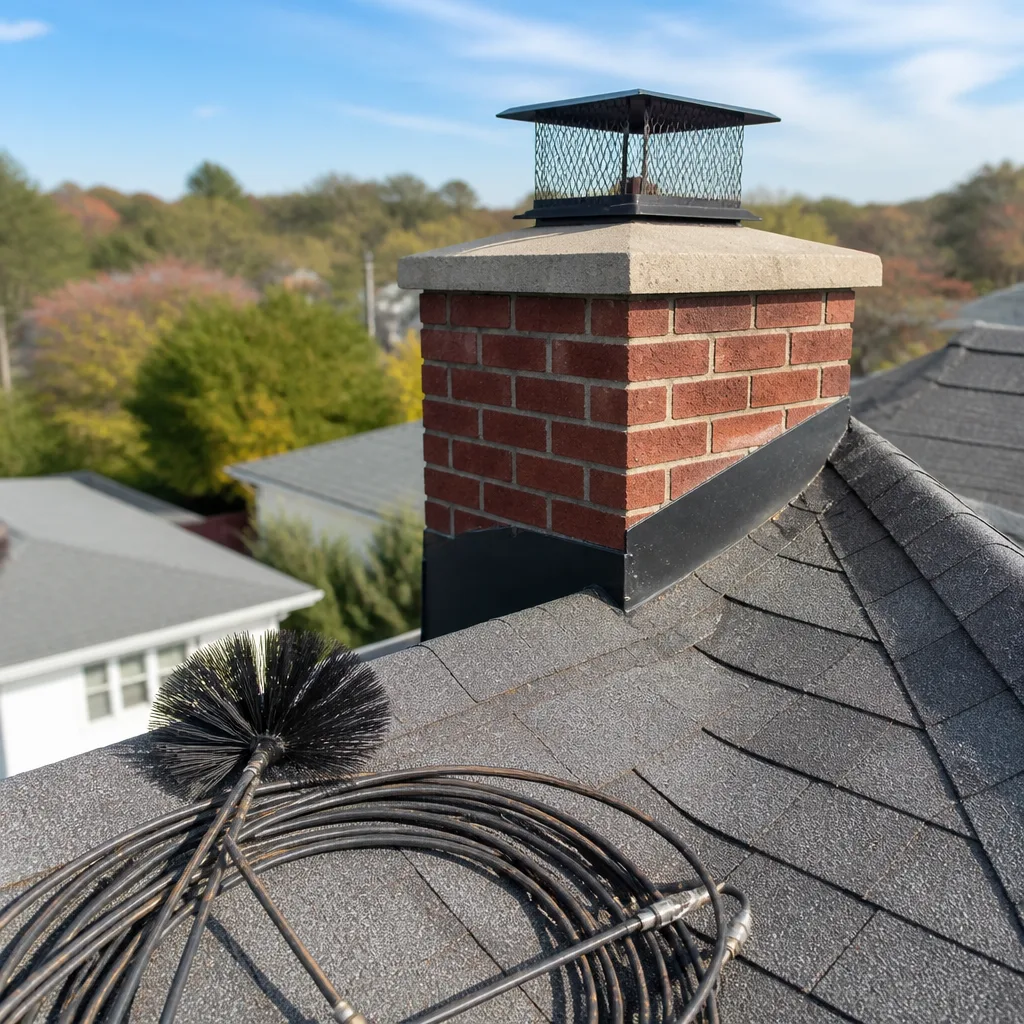 Sweep & inspection
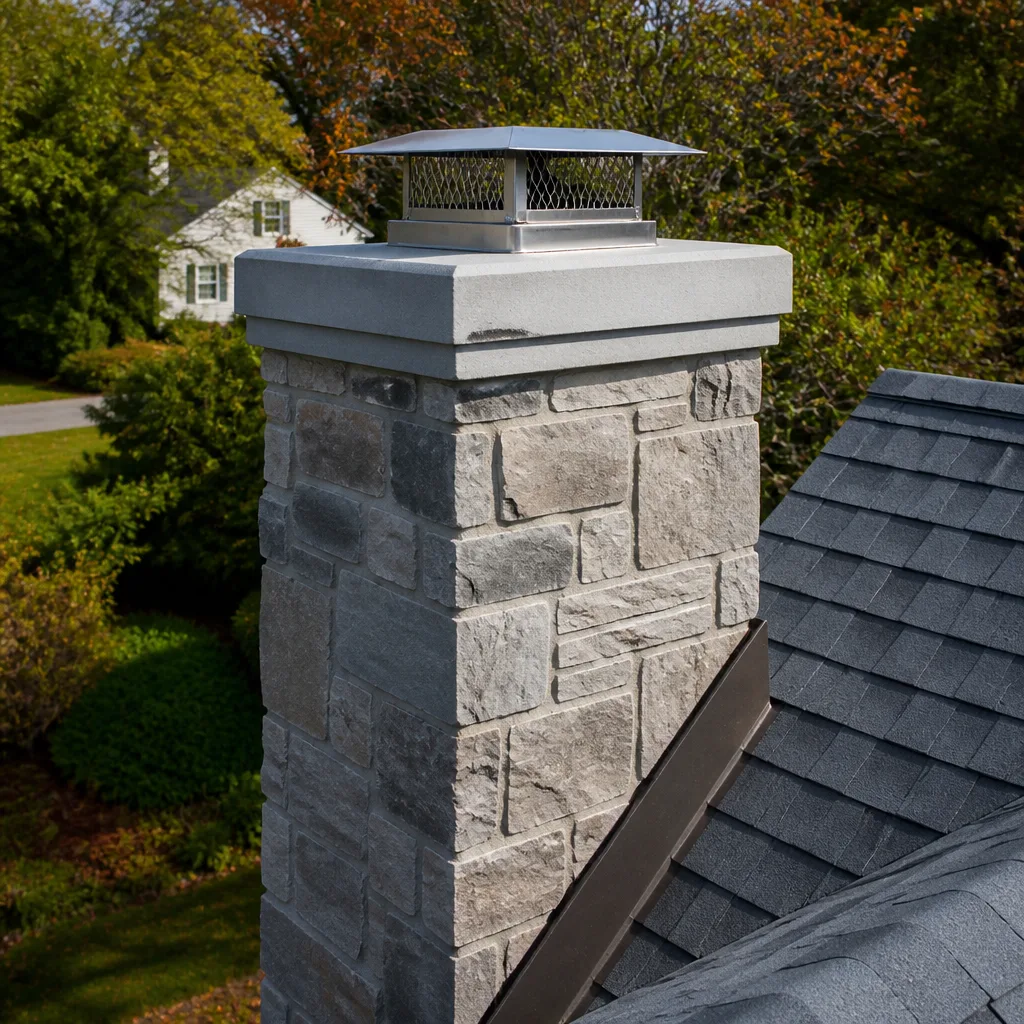 Caps & crowns
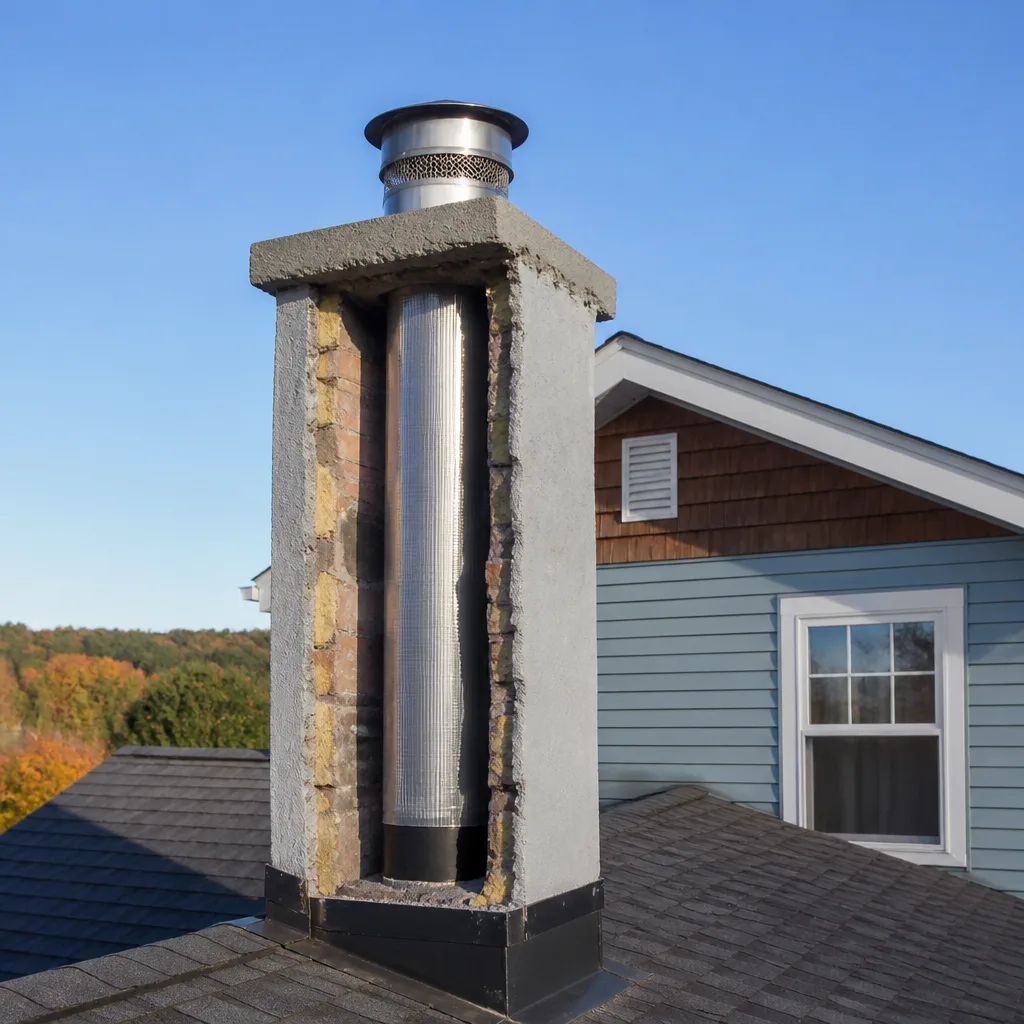 Flue relining
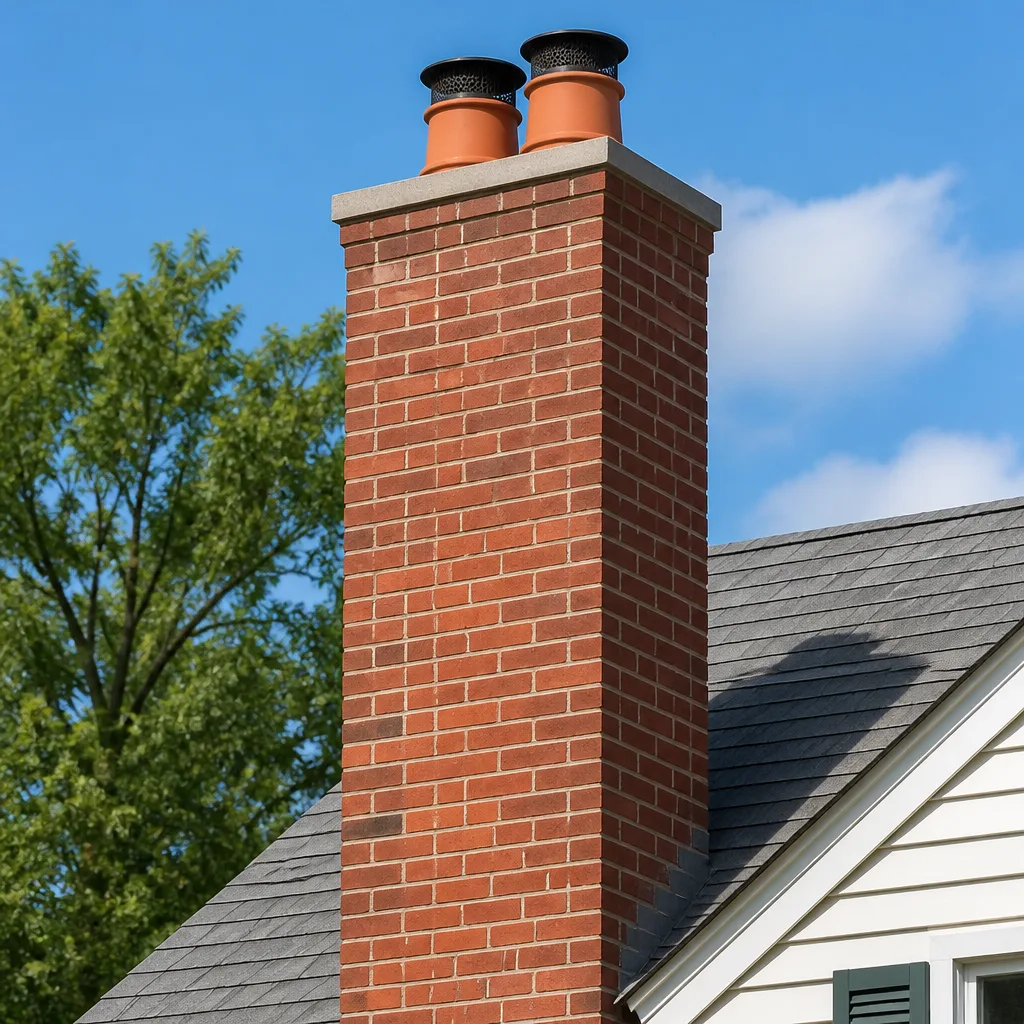 Masonry repair
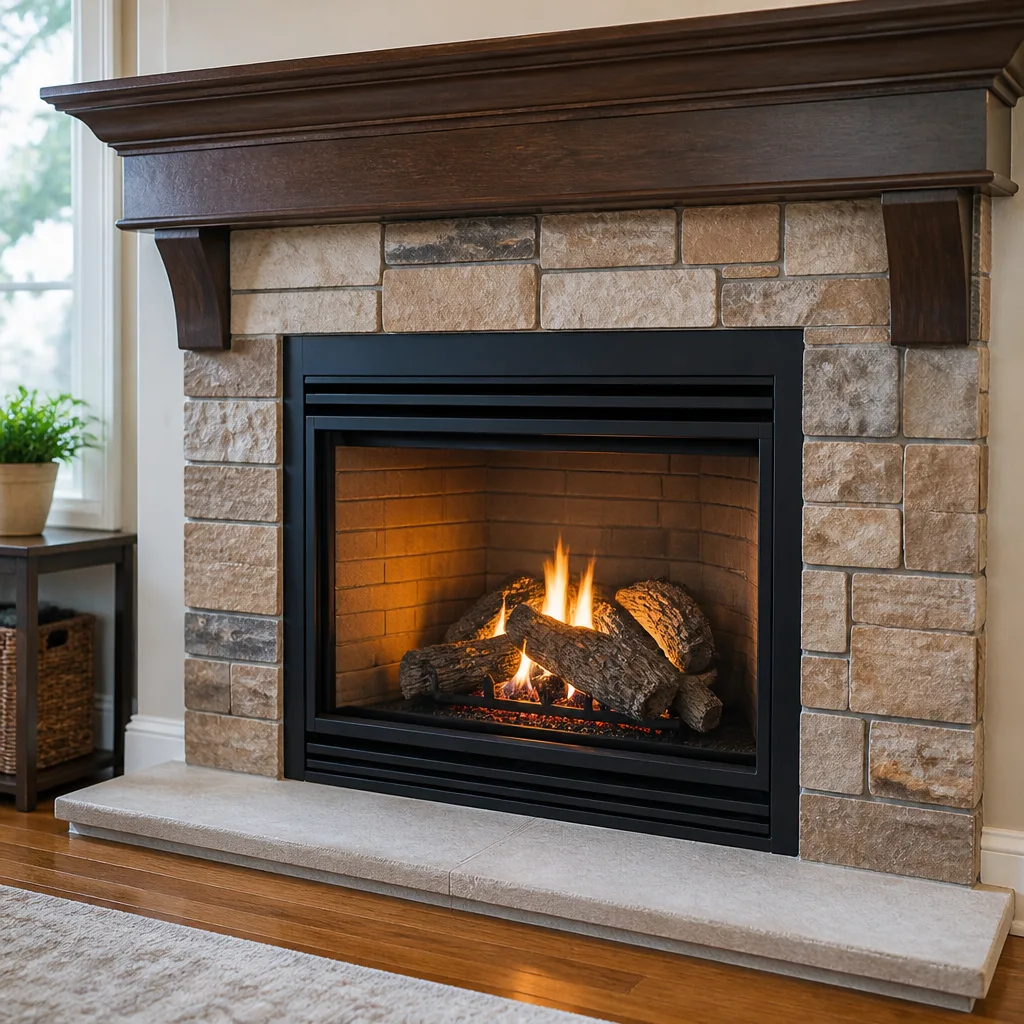 Gas fireplace service
Level 1 sweep and inspection to the NFPA 211 annual standard - flue, crown, cap, and flashing checked and photographed
Chimney sweep logs do not sweep chimneys. They loosen some creosote - which then falls where a brush and vacuum still have to collect it.
Chimney Sweep Maintenance Checklist for Auburn Homeowners
Most chimney maintenance advice you’ll find online is a single sentence wearing a disguise: sweep it once a year and you’re fine. That advice was written for a climate with a real winter and a dry summer, and it doesn’t fit an Auburn home. What actually ages a chimney here is the long wet stretch from October through May, the moss that creeps across a cap, the mortar that softens and then freezes, and the way a house that burns wood all winter cycles between hot and damp for months. A checklist built for Auburn has to follow that calendar, not a generic reminder. Below is the maintenance routine we’d hand a homeowner who wants to catch problems before they become hazards: what to check yourself, what to photograph, what only a trained sweep with a camera should touch, and how the months line up against how we actually burn here.
Quick Answer
A working chimney maintenance routine for an Auburn home has three layers: a look from the ground every month for cap damage, crown cracks, and efflorescence on the brick; listening and smelling inside for musty or acrid odors, smoke rollout, or a draft that resists; and a professional sweep and inspection, typically once a year, done before the burning season starts. The homeowner handles observation. The credentialed sweep handles the flue, the firebox, the liner, and anything above the roofline that needs repair.
Styles & brands we work with
- Sweep & inspection
- Caps & crowns
- Flue relining
- Masonry repair
- Gas fireplace service
Table of Contents
- A Month-by-Month Maintenance Calendar for Auburn’s Climate
- The Five-Minute Ground-Level Check You Can Do Safely
- Interior Indicators to Monitor Between Sweeps
- What to Photograph Before You Call a Sweep
- Where DIY Observation Ends and a Credentialed Sweep Begins
- Why the Cap and Crown Deserve Their Own Line Item
- How We Choose Materials for Auburn Repairs
- How Often Should an Auburn Chimney Be Swept?
A Month-by-Month Maintenance Calendar for Auburn’s Climate
Chimney care in Auburn tracks the weather, not the calendar on the wall of a big-box store. Most of what damages a chimney up here happens in the wet months, and most of what’s discovered gets discovered in the fall, when a homeowner goes to light the first fire and finds smoke in the room. The routine below spreads the work across the year so nothing gets crowded into a single “before winter” weekend.
September and October. This is when you call to book the annual chimney sweep and inspection in Auburn. The firebox has been cold for months, the sweep can see the flue clearly, and there’s time to schedule any repair that shows up rather than rush it. Do your own ground-level look in the same week so you can hand the sweep photos taken from the yard.
November and December. Burning season in Auburn really starts here. Check the firebox for ash buildup every couple of weeks, watch for smoke curling out of the firebox when you open the glass doors, and note any shift in odor. Both months are wet, so look up at the cap after a stretch of rain and see whether water is pooled or stained anywhere it shouldn’t be.
January through March. The heaviest burn and the heaviest rain overlap. This is when mortar that took on water freezes and cracks. It’s also when a cap that was marginal in the fall finally gives up. Keep an eye on the brick on the outside of the chimney chase for spalling or new white staining, and don’t ignore a draft that suddenly resists more than it used to.
April and May. Burn season winds down. This is the second-best window for an inspection, especially if you skipped the fall. It’s also the right time to have a crown or cap repair done, because the dry stretch lets sealants and mortar cure properly.
June through August. The dry months. Chimneys don’t get much attention in summer, but this is when water damage from the wet season gets evaluated in good conditions. If a liner resurfacing or a crown rebuild is on the table, warm dry weather in Auburn is when it goes smoothly.
The point of spreading it this way is that you’re never making a decision about your chimney in a panic on the first cold night. You’re spotting things early, photographing them, and booking a professional while there’s room on the schedule.
The Five-Minute Ground-Level Check You Can Do Safely
The two components most likely to fail quietly on an Auburn home are the chimney cap and the crown, and both can be checked from the ground with your feet planted. Stand back far enough to see the top of the chimney against the sky, bring a phone with a zoom camera, and look for these things in this order.
- The cap. The cap is the metal or mesh cover at the very top. Look for holes in the mesh, panels that have detached or folded, rust that’s eaten through a joint, or a cap that’s visibly tilted. A missing or damaged cap is an open invitation for rain, birds, and squirrels to get into the flue.
- The crown. The crown is the concrete or masonry slab that sheds water off the top of the chimney. From the ground you’re looking for a visible crack, a chunk missing at the edge, or a crown that’s separated from the flue tile. Any of those means water is getting into the masonry below.
- Mortar joints. Zoom in on the brickwork. You’re not looking for perfect joints – you’re looking for joints that have receded, gone crumbly, or dropped out entirely. On the wetter face of the chimney, joints soften first.
- Efflorescence. That white, chalky staining on brick is salt pushed to the surface by water moving through the masonry. A little is normal. A growing patch that wasn’t there last year means water is finding a path through the chimney.
- Flashing at the roofline. Where the chimney meets the roof, look for lifted metal, gaps, or dark staining on the shingles below. That’s a sign water is running behind the flashing instead of over it.
Take a photo of each thing that looks off, from the same angle, once a month. A photo lets a sweep see what’s changing even if they can’t get out immediately, and more importantly it lets you see the change yourself. Most of what gets fixed correctly on the first visit gets fixed because someone noticed it early from the ground.
A word on what not to do from the ground: don’t climb onto a wet roof to inspect it up close, don’t reach into a flue, and don’t try to knock off a crack in the crown with a tool from a ladder. Auburn roofs get slick in the rain and a chimney isn’t worth a fall.
Interior Indicators to Monitor Between Sweeps
When a chimney is starting to have a problem, it usually tells you from inside first. Learning to read those signals – rather than waiting for something dramatic – is what turns chimney maintenance from a chore into an early-warning system. Here’s what we watch for, and what each one usually means.
Odor type matters more than odor strength. A musty, damp, basement-like smell coming from the firebox when it’s not in use usually points to moisture – a leak past the cap or crown, or water wicking through masonry that needs attention. An acrid, sharp, almost chemical smell, especially during or right after a fire, points to creosote buildup or incomplete combustion. The two are different problems with different fixes, and it’s worth noting which one you smell so you can describe it accurately.
Draft resistance. A chimney that used to draw well and now hesitates when you light a fire is telling you something has changed. Smoke that rolls out into the room before the flue warms up, a fire that struggles to start, or smoke that pushes back when the room exhaust fan runs – all of these suggest a draft problem, a partial blockage, or a flue that needs attention. It’s worth writing down how often it happens and under what conditions.
Smoke rollout. Some rollout is normal on a cold start. Rollout that happens every time, or that gets worse, or that comes with the smell of smoke lingering in the room after the fire is out, is not normal. Note whether it happens on start-up only, throughout the burn, or when you open the doors.
Ash and soot patterns. Look at the firebox walls after a burn. Heavy soot on the glass doors or a black, sticky film on the firebox walls suggests the fire isn’t burning cleanly. Soot that collects quickly after a cleaning is another data point for a sweep to see.
Water inside. Water pooling or staining in the firebox after heavy rain is a direct sign that the cap, crown, or flashing has failed. This is one of the failures that leads to real structural damage if it goes on across a wet Auburn winter.
Write these observations down. When the sweep arrives, a list of “musty smell in the firebox, worse after rain, started in November” plus a photo of the cap gives a much better starting point than “it seems off.”
What to Photograph Before You Call a Sweep
A phone full of photos taken before the appointment turns a general look-over into a targeted inspection. It also gives you and the sweep a shared reference for what changed between visits. Here’s what to shoot, using natural daylight, standing on the ground with the zoom on and your back to the sun if you can.
- The cap from two angles. Straight on and from the side. Side shots reveal a tilted cap or a detached panel that a straight-on shot hides.
- The crown from above if possible. If you have a safe vantage from a second-story window across the yard, use it. A crown’s crack is far more visible from a high angle.
- The brickwork on all visible faces. Shoot the north and west faces separately, because moisture damage often shows up on the wet side first.
- Any efflorescence or spalling. Get close enough with the zoom that the texture of the stain is visible.
- The flashing at the roofline. Where the chimney meets the shingles, both the uphill and downhill sides.
- Inside the firebox. The back wall, the side walls, and the damper when open.
- Any interior water stain or soot pattern. Note the date you noticed it.
- A short video of the smoke on a cold start. Thirty seconds of the firebox during light-up tells a sweep more about draft than any description.
Keep the photos in one album with dates. When you compare this year’s cap photo to last year’s, you’ll see things you didn’t notice in the moment. That habit alone catches a surprising number of slow-moving problems.
Where DIY Observation Ends and a Credentialed Sweep Begins
There’s a clear line between the maintenance a homeowner can safely do and the work that needs a trained sweep with professional equipment. It’s not about competence – it’s about what can be seen and reached from the ground versus what requires being on the roof, in the flue, or behind a camera.
What you can do safely:
- Visual inspection from the ground with a phone.
- Monthly photo documentation.
- Noting odors, draft behavior, and smoke patterns.
- Keeping a log of when the fire was used and any problems observed.
- Clearing the firebox of ash and unburned wood before an appointment.
- Confirming your smoke and carbon monoxide detectors are working.
What a credentialed sweep should do:
- Sweep the flue with proper brushes and rods – including the smoke chamber and shelf – so soot and creosote are actually removed, not just knocked loose.
- Run a video camera down the flue to inspect the liner, joints, and any offsets along the full run. The camera is what catches a cracked tile near the top that no hand tool can reach.
- Inspect the firebox, damper, smoke chamber, and the visible exterior.
- Diagnose draft problems, moisture intrusion, and any structural issue in the masonry.
- Do cap, crown, liner repair, and masonry repair with professional-grade materials.
The reason this line matters is that some of the work looks simple but isn’t. Crawling into a flue or climbing a wet roof to look at a crown is genuinely dangerous. We’ve seen enough chimney problems that started as a “quick look” to be clear about it: leave the flue and the roof to a sweep, and put your own effort into watching the things you can actually see from the yard.
Why the Cap and Crown Deserve Their Own Line Item
On most checklists, chimney caps and crowns are footnotes. In Auburn’s climate they’re the two components most responsible for the long-term survival of the chimney, because they’re the first thing water meets. A cap that’s lost its spark arrestor, a crown that’s got a hairline crack – neither is dramatic, and neither gets noticed, yet over a Pacific Northwest winter either one lets water into the masonry and the flue.
A chimney cap does three jobs: it keeps rain and snow out of the flue, it keeps birds and small animals from nesting, and it stops sparks from landing on the roof. When a cap rusts through or a panel detaches, all three fail at once. Left unrepaired through a wet Auburn season, water runs down the flue and into the smoke chamber, softening the mortar along the way. A chimney cap & crown installation or repair is one of the highest-value maintenance items on any chimney, and it’s often underestimated because the damage it prevents is invisible until it’s expensive.
A crown handles a different job: it’s the sloped slab on top of the chimney that sheds water off the whole structure. A crack in the crown lets water in behind the brickwork, and once that masonry is wet it freezes and spalls. That’s how a small crack becomes a masonry repair.
The good news is that both the cap and the crown can be inspected from the ground with a phone, and both are relatively straightforward to repair. They’re also a natural part of an annual chimney inspection, so having one done alongside a sweep means nothing gets missed.
Materials matter here. We work with Gelco and Copperfield components for cap and crown work and Olympia Chimney supply products for other chimney components, because the difference between a cap that survives ten Auburn winters and one that rusts through in three is the quality of the steel and the coating on it. We’d rather use the material that holds up than the one that’s cheapest on the shelf.
How We Choose Materials for Auburn Repairs
Once a chimney issue is diagnosed, the material chosen for the repair determines how long that fix lasts. This is where we spend most of our time thinking, because the difference between a liner that survives Auburn’s wet season and one that doesn’t is often the spec of the material, not the skill of the install.
For liner work, we install and work with DuraFlex flexible liner systems. A flexible liner handles offset flues and the internal geometry of an older chimney that a rigid liner can’t easily fit. For clay-tile liners that are damaged but still structurally sound, HeatShield resurfacing can often restore the liner rather than require full replacement, which is a meaningful alternative to consider when a sweep says the liner needs work.
On the ventilation and component side, we work with Famco and Gelco for the parts that round out a chimney system – caps, dampers, and the pieces that keep the whole assembly working together. Olympia Chimney supply products fill in the rest. The reason we name these brands is that we’ve seen what happens when a repair is done with a generic part that looked fine on paper: it fails in the same weather that failed the old one.
For a fireplace repair – a damper that won’t close, firebox brick that’s cracked, a smoke chamber that needs rebuilding – the material choice matters just as much. A repaired firebox gets used every winter, and what it’s repaired with determines whether it needs to be redone.
None of this is a reason to over-repair. The right move is to diagnose accurately first, then choose the material that matches the problem. That’s the whole reason we offer a standalone inspection as its own service: you get a clear picture of what’s actually wrong before any decision about repair gets made.
How Often Should an Auburn Chimney Be Swept?
For a typical Auburn home burning wood regularly through the winter, once a year is the working answer, timed before the burn season starts. But “once a year” is a floor, not a ceiling. Frequency depends on how much you burn, what you burn, and how the chimney has behaved.
- Occasional use – a fire on the coldest weekends only. Once a year, before the season.
- Regular winter use – a fire most evenings from November through February. Once a year, plus a visual check mid-season.
- Heavy use – the fireplace is a primary heat source. Sweep based on the buildup the sweep actually sees, which may mean more than once a year.
- After any chimney fire – even a small one. A fire inside the flue can crack tiles or damage the liner in ways you can’t see without a camera.
- After a change in behavior – new smoke rollout, new odor, new draft resistance. Any of those is a reason to inspect sooner, regardless of when the last sweep was.
For gas fireplaces, the maintenance intervals differ because there’s no creosote, but the venting still needs inspection for blockages, corrosion, and cap condition. For a home that’s just been purchased, get a sweep and inspection done before the first fire, because you don’t know how the previous owner used it.
The underlying reason to stay ahead of this is safety. Creosote is what fuels chimney fires, and a chimney fire is a serious event even when it’s brief. The carbon monoxide side matters just as much – a blocked or damaged flue that no longer drafts properly can push exhaust back into the house. A sweep removes the buildup; an inspection with a camera catches the crack behind it. Both are part of the routine.
Common Mistakes to Avoid
- Treating the cap as an accessory. It’s the first line of defense against water and animals. If it’s missing or damaged in September, it won’t fix itself by December.
- Waiting until the first cold night to book. An Auburn chimney sweep schedule fills in the fall. Booking in September leaves room to schedule a repair, not just a cleaning.
- Ignoring a small crack in the crown. The crown only works if it sheds water completely. A crack lets water into the masonry, and every freeze that follows makes it worse.
- Calling only when there’s a problem. By the time smoke comes into the room, the draft problem is well established. A routine sweep and inspection catches these earlier.
- Confusing a sweep and an inspection. A sweep cleans. An inspection looks. They belong together, and skipping the inspection because you “already had it swept” leaves the diagnosis undone.
- Putting off a liner concern. A cracked clay tile is a safety issue. If the sweep recommends evaluating or repairing the liner, don’t wait for a second cold season to think about it.
- Trusting a general handyman to do chimney work. Masonry on a roof, a liner install, and a firebox rebuild all require chimney-specific material knowledge. This is a job for a specialist, not a general contractor’s side task.
The common thread in all of these is that chimney maintenance is mostly about catching things early. The actual repairs when caught early are quicker and less involved than the same problems caught a year or two later.
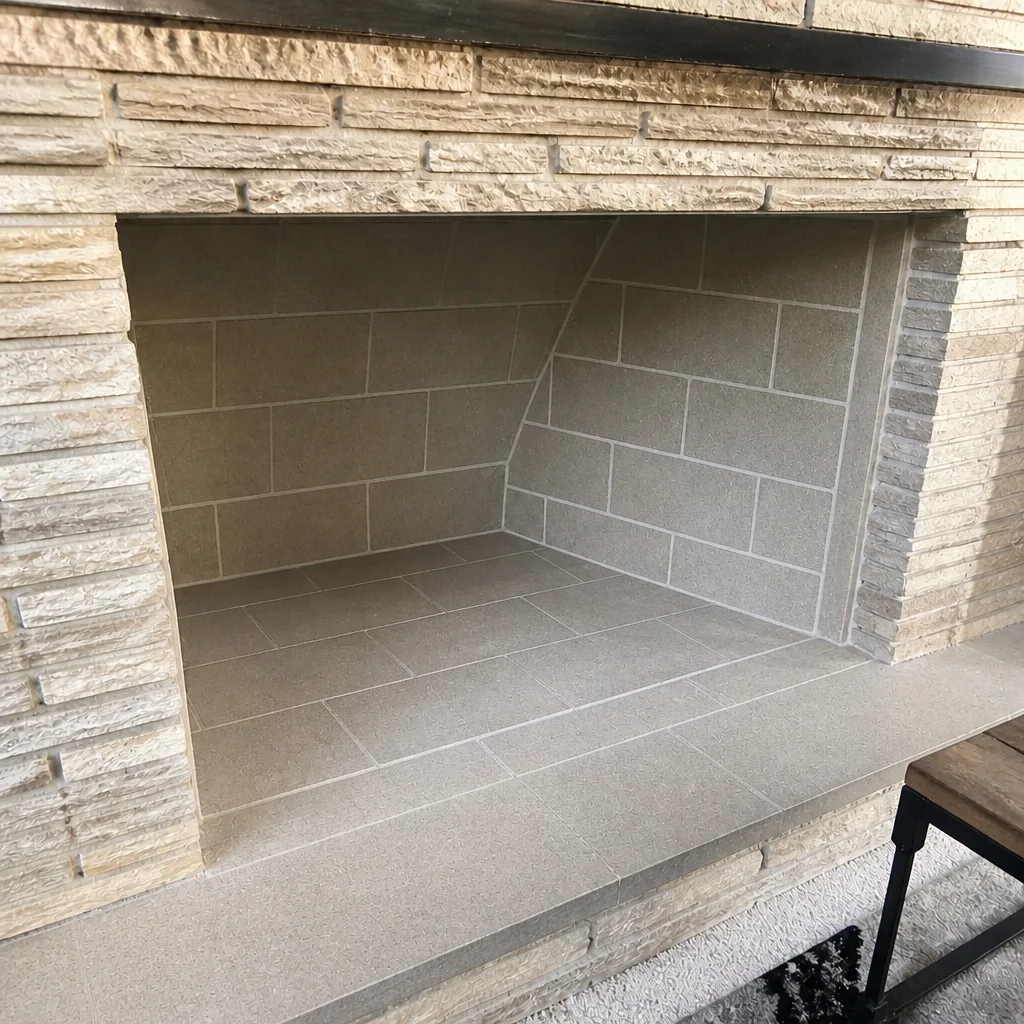
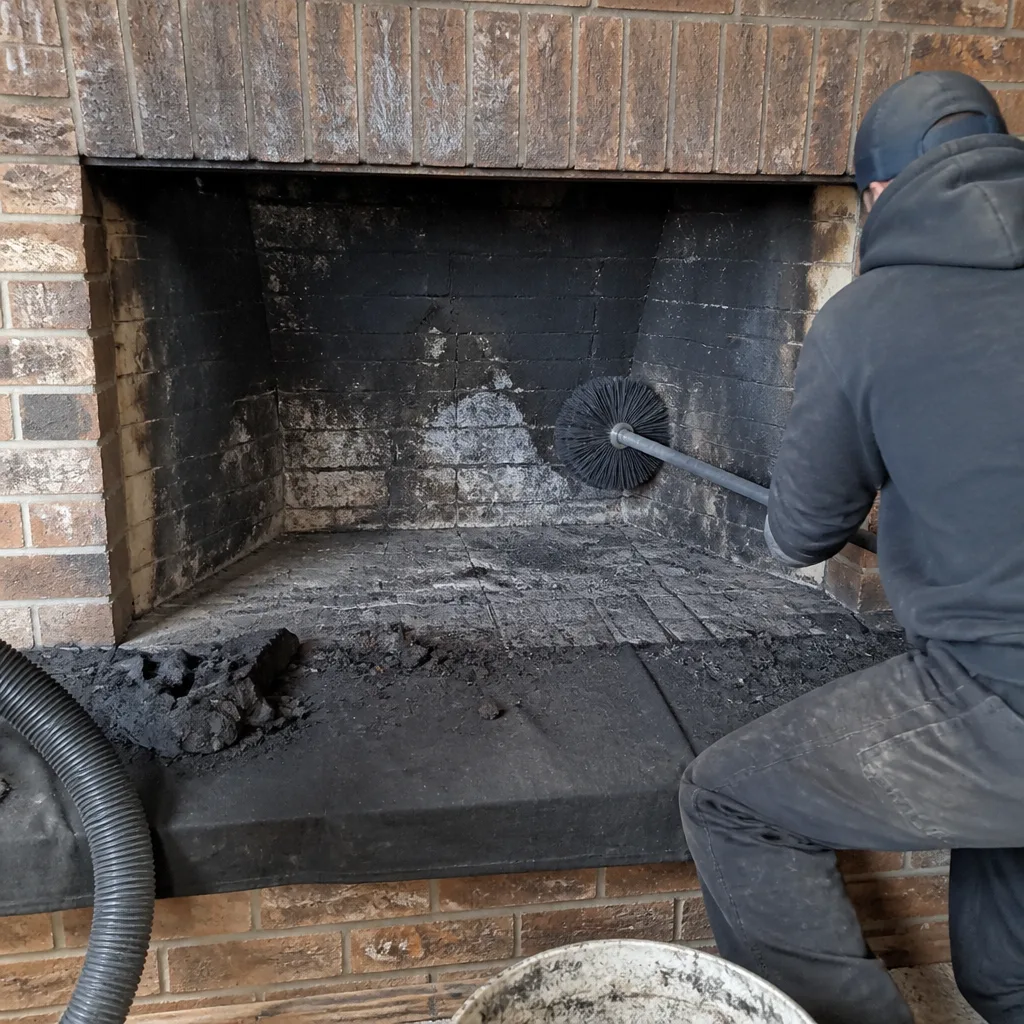
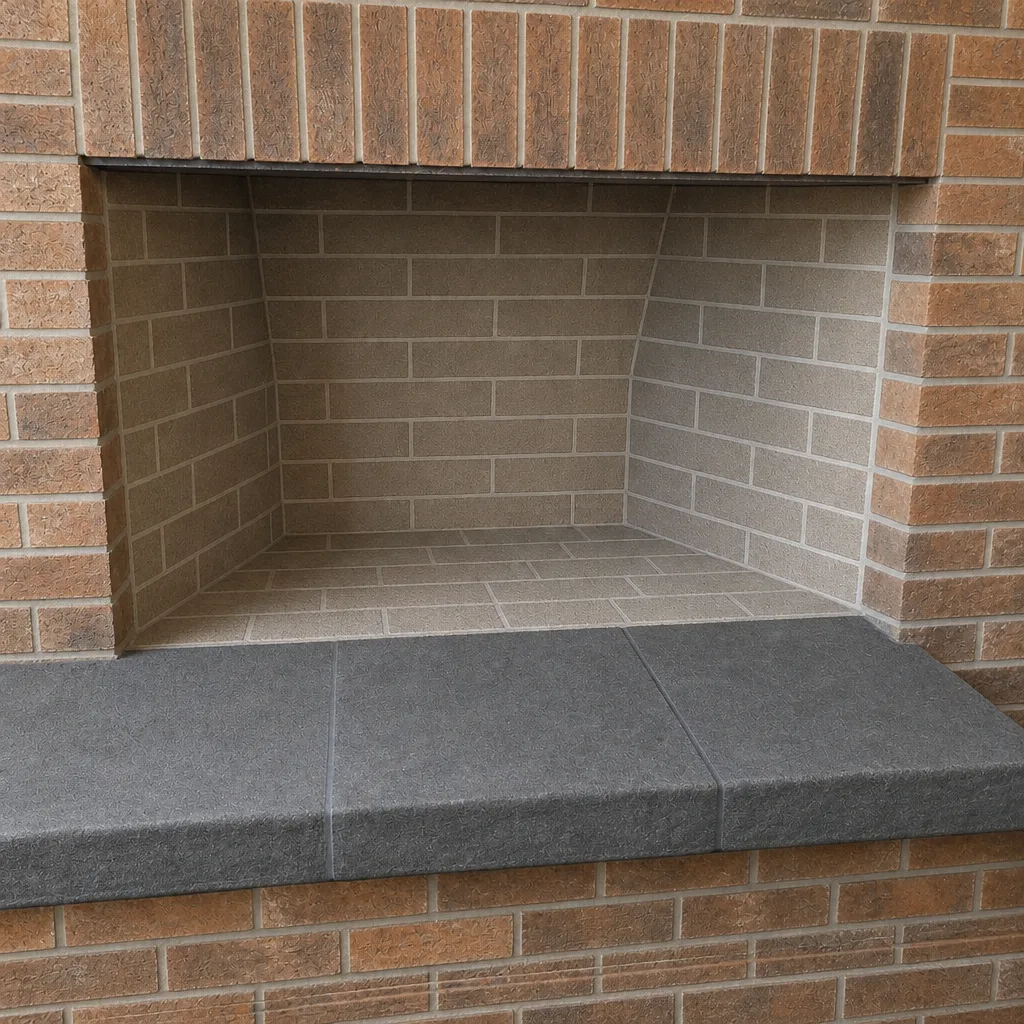
See the difference
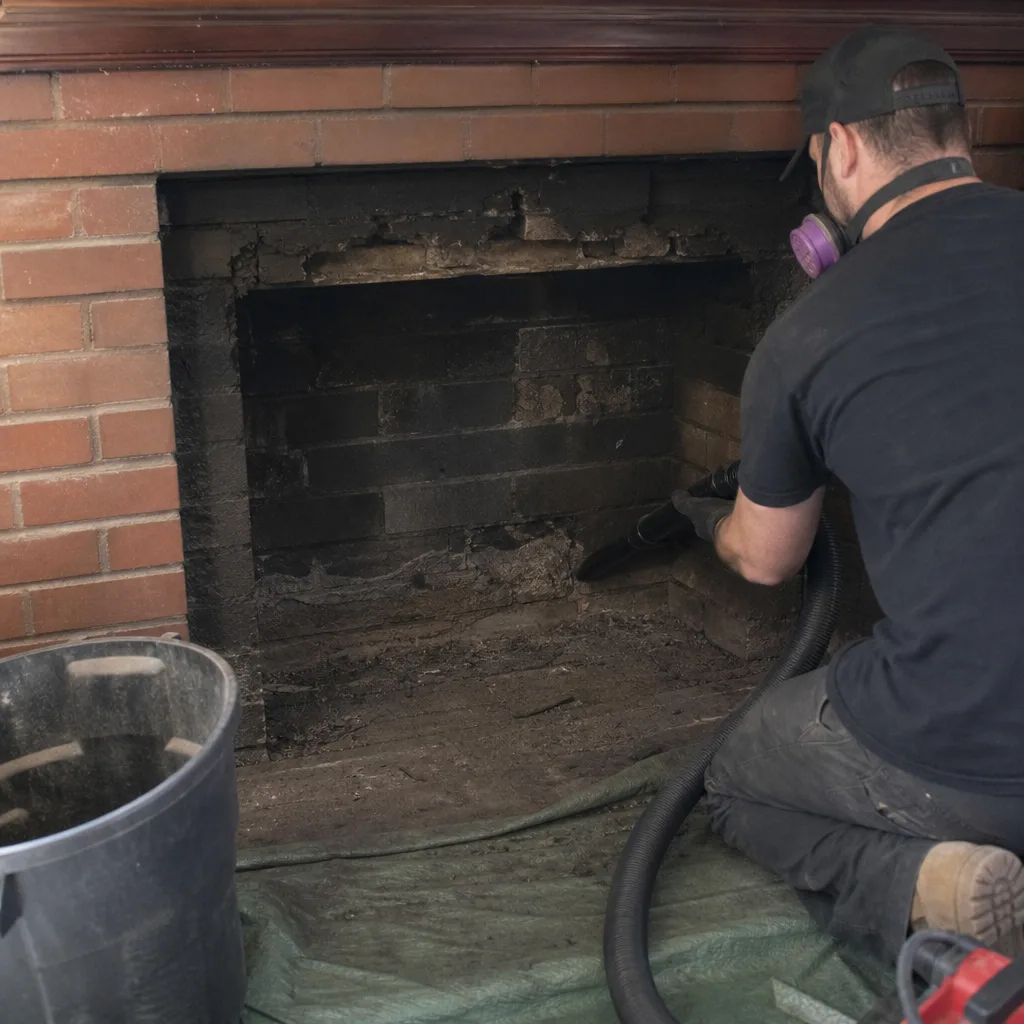 Before
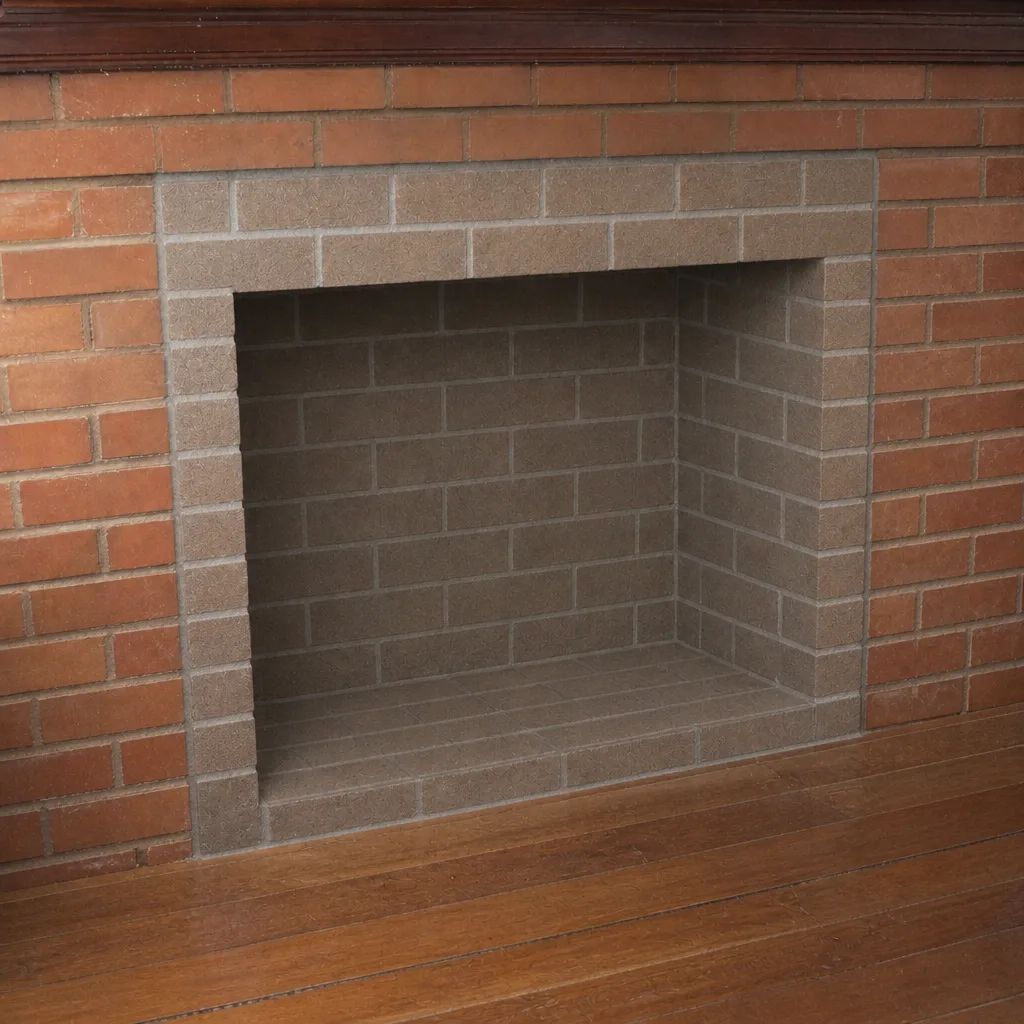 After
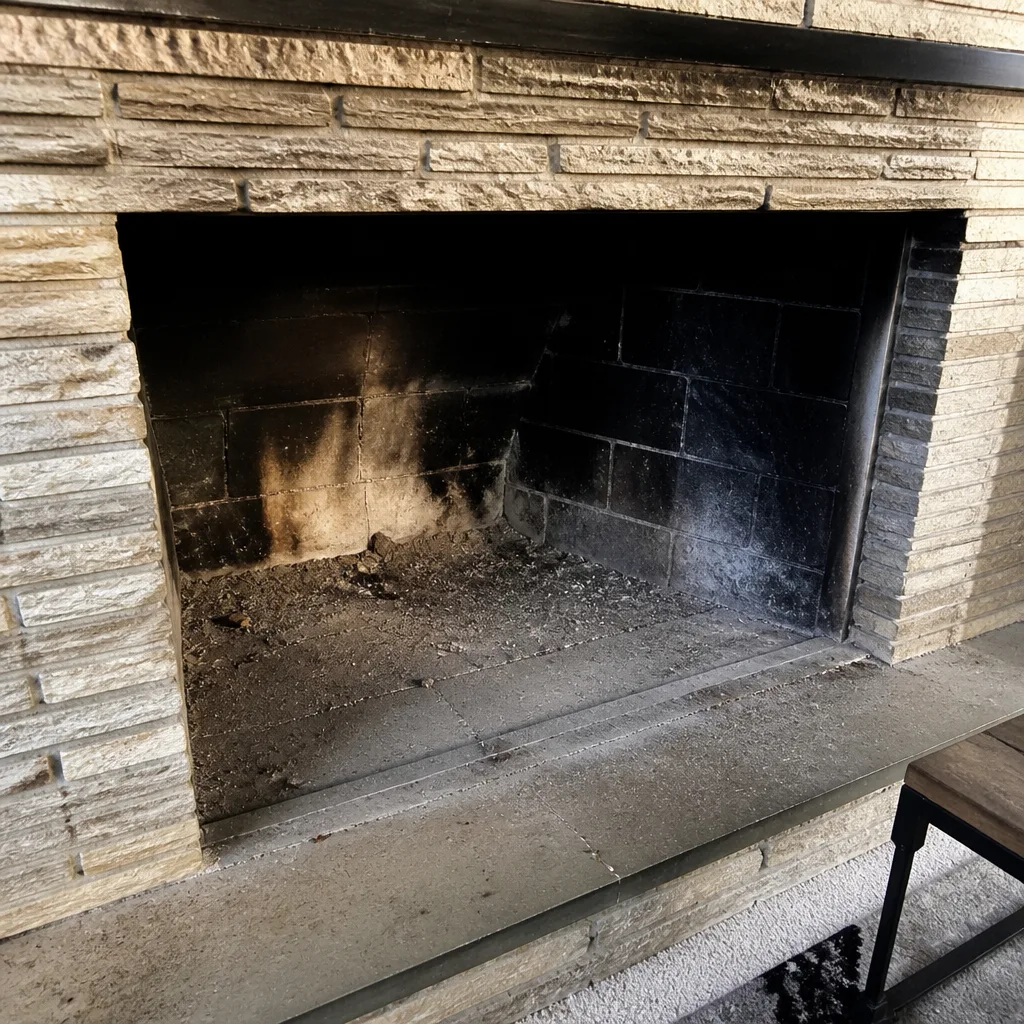 Before
 After
 Before
 After
When to Call a Professional
Some chimney problems are budget items you can plan around. Others are safety problems that need to be addressed now, or at least before the next fire. Call a professional if you notice any smoke rollout that’s persistent, a musty odor that gets worse after rain, water pooling in the firebox, efflorescence that’s grown across a winter, a cap that’s visibly tilted or missing its mesh, or masonry that’s spalled or cracked on the chimney chase. Call sooner if you’ve had any kind of chimney fire, even a small one, because the flue can be damaged internally without visible signs.
Auburn Chimney Sweep Pros provides a full chimney service – sweep, inspection, fireplace repair, chimney repair, and cap and crown work, all handled by one team. From annual sweep to full liner restoration, we keep the whole system in view. Our technicians have up to 9 years of experience, and the inspection is offered as a standalone service so you get an honest diagnosis before any repair decision. Call (877) 492-4265 for a free estimate.
Frequently Asked Questions
A chimney sweep in Auburn is typically priced per job based on the length and accessibility of the flue and whether an inspection is included. We quote by written estimate after we’ve seen the chimney, so the number you get reflects what the job actually involves. Call (877) 492-4265 for an exact quote – estimates are free.
Yes, because a sweep and an inspection look for different things. A sweep removes buildup. An inspection with a camera looks for cracks in the liner, damage in the smoke chamber, and moisture intrusion that sweeping alone won’t reveal. Doing them together gives you a complete picture of the system.
Once a year for most homes that burn wood regularly, timed before the burn season starts in the fall. Homes where the fireplace is a primary heat source may need more frequent sweeping, and any chimney that has had a chimney fire should be inspected right away regardless of schedule. Call (877) 492-4265 to book a sweep and get on a routine.
Small problems get bigger. A missing cap lets water and animals into the flue; a cracked crown lets water into the masonry; creosote buildup increases the risk of a chimney fire. None of these are dramatic in the first year, which is exactly why they get missed. Catching them early is the difference between a straightforward repair and a rebuild.
You can do a ground-level visual check with a phone, and you should. You can’t safely sweep the flue or inspect the liner without being on the roof and in the flue with camera equipment. That part needs a trained sweep. Do the observation yourself and let a specialist handle the rest.
Clear the firebox of ash and unburned wood, remove any grate or log holder, and make a short list of what you’ve noticed – odors, smoke patterns, draft problems – along with any photos from the ground. That gives the sweep the context to look at the right things first. Call (877) 492-4265 to book; we can work with your schedule and answer questions before the visit.
The Bottom Line
A chimney maintenance routine for an Auburn home works because it follows the local weather, not a generic reminder. Watch the cap and crown from the ground every month, note what the house tells you from inside, photograph everything so you can see change, and hand the flue and the roof to a trained sweep once a year. The repairs when they come – cap, crown, liner resurfacing with HeatShield, or a new DuraFlex liner – get done correctly and with professional-grade materials. From annual sweep to full liner restoration, the goal is a chimney that’s safe to burn in. Auburn Chimney Sweep Pros is ready to help. Call (877) 492-4265. We answer 24/7. Fast dispatch from 7am to 7pm, Sunday through Friday.
Written by the team at Auburn Chimney Sweep Pros.